When to Come to Cairns: The Stinger Season, the Wet, and the Months Nobody Books
Updated September 24, 2026 · 8 min read

Far North Queensland does not have four seasons. It has two, locals call them the wet and the dry, and the gap between them is larger than anything in Europe. The numbers below come from the Bureau of Meteorology’s record at Cairns Aero, which has been measured since 1942.
The two numbers that explain everything
Mean monthly rainfall at Cairns Aero, 83 years of record:
| Jan | Feb | Mar | Apr | May | Jun | Jul | Aug | Sep | Oct | Nov | Dec | |
|---|---|---|---|---|---|---|---|---|---|---|---|---|
| Rain (mm) | 404.8 | 437.5 | 422.1 | 201.8 | 92.0 | 45.5 | 33.2 | 26.5 | 34.1 | 47.2 | 87.9 | 193.8 |
| Mean max (°C) | 31.5 | 31.3 | 30.7 | 29.4 | 27.7 | 26.1 | 25.9 | 26.7 | 28.2 | 29.7 | 30.8 | 31.5 |
February averages 437.5 mm. August averages 26.5 mm. That is a factor of sixteen between two months at the same weather station, and the annual total is 2,025.5 mm.
The temperature barely moves by comparison: the hottest month averages 31.5 °C and the coldest 25.9 °C. Cairns has no cold season. It has a sticky season and a pleasant one.
The third figure is the one that changes how a holiday feels: days with at least 1 mm of rain. February averages 16.1 of them, August and September 4.9. That is the difference between rain as an event and rain as the background.
The dry: May to October
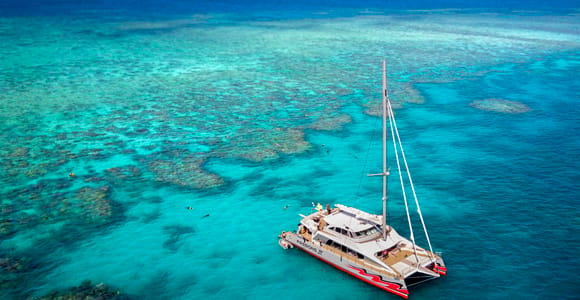
This is the season everything is priced for, and it earns it. Mornings in the mid-twenties, low humidity, water on the reef at its clearest because there is no runoff coming down the rivers, and the highest chance that a boat, a balloon or a scenic flight actually goes.
The costs are real and they are not weather:
- Prices and availability. July and the Australian school holidays are when the good reef boats fill first. Booking two days ahead in July is a different experience from booking two days ahead in February.
- The rainforest is quieter. The Daintree in September is a beautiful dry forest. In February it is a rainforest doing what a rainforest does, which is most of the reason people photograph it.
- The waterfalls shrink. Millaa Millaa in September is a pretty ribbon. Millaa Millaa in March is a wall.
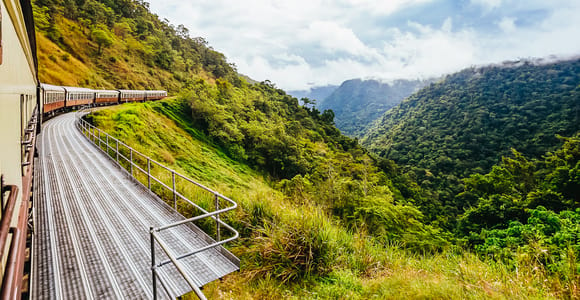
There are 25 Atherton Tablelands and waterfall trips from €22, and which month you pick changes what you get more than which operator you pick. The full-day waterfall tour is €116.87 with 4.7 stars from 1,042 reviews over 10 hours.
The wet: December to March, and what it is really like
The wet is not a washout. It is hot, humid, and it rains hard — often in the afternoon, often for an hour, and sometimes for three days.
What you get for it: full waterfalls, the swimming holes actually worth swimming in, rivers at proper levels for rafting and tubing, a forest that smells like something, and a town that is not full.
What you risk: reef visibility drops after heavy runoff, boats are cancelled for wind more often, and roads north of the Daintree can close. This is also the cyclone season — a direct hit is rare in any given fortnight, but the season is real, it runs roughly November to April, and it is the reason the insurance question is worth asking before you book flights.
The honest summary of the wet is that it is the better value and the worse odds. If you have one week and one shot at the reef, that matters. If you have two weeks, it matters much less.
Stinger season: November to May
This is the seasonal fact that actually changes your behaviour, and it is the one most people arrive not knowing.
Surf Life Saving Queensland describes a marine stinger season running from November through to May, when the risk from box jellyfish and Irukandji is higher. Two things follow:
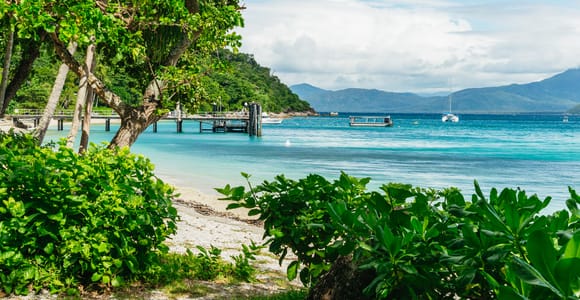
- On the mainland beaches, swim inside the netted enclosures and between the flags. The nets go in for the season. Outside them, in stinger season, is not a sensible swim regardless of how the water looks.
- On the reef boats, you will be given a full-length lycra suit, and in these months it is not optional on most boats. Wear it. It also solves the sunburn problem nobody plans for. What the suits and the reef trips actually involve is in our snorkelling guide.
If someone is stung, the state lifesaving service’s published first aid for these species is to douse the area liberally with vinegar for at least 30 seconds, and to call 000 in an emergency. Patrolled beaches and reef boats carry vinegar for exactly this reason; that is the whole of what belongs in a travel article, and the rest belongs to the lifeguard on the sand.
What the stinger season does not close: the reef itself, the rainforest, the Tablelands, the islands, or the lagoon in town. It is a rule about where you swim off a mainland beach, not a reason to come in a different month.
June and July: the whales nobody mentions
Dwarf minke whales migrate to the northern Great Barrier Reef each winter, and June and July account for about 90 % of sightings. They gather on the Ribbon Reefs, well north of Cairns, and they are unusual among whales in that they approach stationary boats and stay.
This is not a day trip, and no day boat from Cairns will take you to them. The encounters happen on liveaboard expeditions of roughly three to seven days, run by operators with swim-with-whale permits. If that is why you are coming, build the trip around it — and book it long before you book anything else, because the permitted operators and the window are both small.
The rest of the year, the 61 reef trips from €97 are the same reef and a different animal list.
Month by month, briefly
- June to September — the safe answer. Best water, no stinger season on the beaches, highest prices, busiest boats. September is the pick of the four: 34.1 mm of rain on average, and the July peak has passed.
- October and November — warm, still mostly dry, prices easing. The nets go in from November.
- December to March — hot, wet, green, cheap, and the season where you want a spare day in hand for every booking.
- April and May — the underrated months. The rain is falling away, the waterfalls are still running from the wet, and the crowds have not arrived. May is the best single compromise on this list.
If you can only come in February
Come anyway, and plan differently: book the reef for early in your stay so you can move it, expect afternoon rain rather than being surprised by it, swim in the netted enclosure or the lagoon in town, and spend a day in the Tablelands looking at waterfalls that people arriving in September will never see at that volume.
The wet season is the only time of year this place looks like the postcard of a rainforest rather than a very green hillside.